
Chicken Road Casino Email Verification Steps for Canadian Users
Magnifique_opportunité_de_gagner_gros_avec_rodeoslot_casino_et_ses_jeux_en_lign
Eylül 28, 2026Unlock rewards at 1win: subscribe now for the latest casino news and offerings
Eylül 28, 2026
For Canadian players exploring online casino games, Chicken Road offers a simple arcade-style gambling experience built around timing, risk management, and cash-out decisions. Before playing for real money, however, users usually need to complete account registration and email verification. This guide explains the process in practical detail, while also reviewing the game’s main features and the checks Canadian users may encounter.
Chicken Road Casino Review for Canada
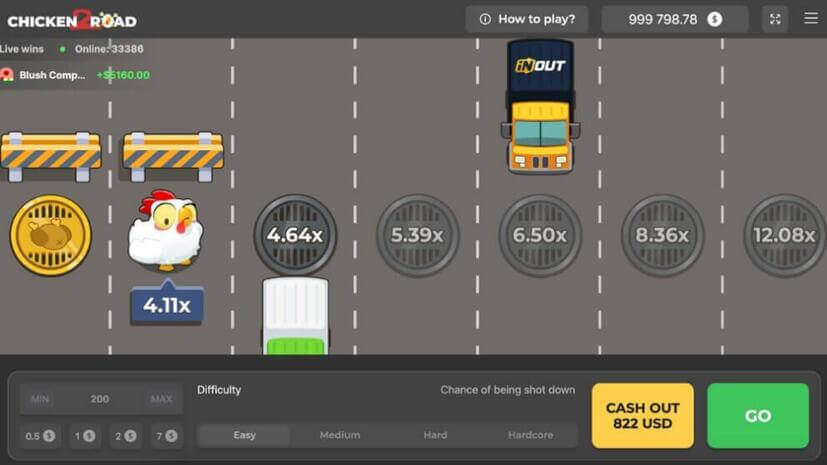
Chicken Road is a fast-paced casino game in which a chicken moves across a hazardous road. Each successful step can increase the potential multiplier, but a vehicle can appear at any moment and end the round. The player decides whether to continue or collect the current amount. This format combines a simple interface with a clear risk-and-reward structure.
The game is generally suitable for short sessions because each round may last only a few seconds. It does not require complex rules, card knowledge, or slot paylines. The central decision is whether the current multiplier is attractive enough to justify another move. As with every casino game, the outcome is uncertain, and no strategy can guarantee a profit.
Email Verification Steps for Canadian Users
Choose a licensed or reputable casino
Start by selecting an online casino that accepts players from your Canadian province or territory. Availability can differ between Ontario, British Columbia, Alberta, Quebec, Manitoba, Saskatchewan, Nova Scotia, New Brunswick, Newfoundland and Labrador, and Prince Edward Island. Review the operator’s licensing information, payment methods, terms, and responsible gambling tools before registering.
Open the registration form
Click the registration or sign-up button and provide the requested information. Most casinos ask for your name, date of birth, residential address, telephone number, and email address. Enter your information accurately. Inconsistent data can delay identity checks or prevent withdrawals later.
Use an active personal email address
Choose an inbox that you can access immediately. Avoid temporary email services, shared addresses, or an account containing spelling errors. The email address may be used not only for activation but also for account notices, security alerts, promotions, and withdrawal communications.
Check your inbox for the verification message
After submitting the registration form, the casino should send an email containing a verification button, activation link, or one-time code. Delivery is often immediate, although it can take several minutes during busy periods. Check the spam, junk, promotions, and updates folders if the message does not appear in your main inbox.
Click the link or enter the code
Open the message and follow the instructions. A link may automatically confirm your account, while some casinos display a code that must be entered on the registration page; Verify that the website address is correct before entering login details. If the link has expired, request a new email rather than using an unfamiliar third-party website.
Log in and complete the account profile
Once the email is confirmed, return to the casino and sign in. Some platforms require additional profile information before allowing deposits or gameplay. Complete these fields carefully and check whether the account has been assigned to the correct Canadian jurisdiction.
Complete identity verification if requested
Email confirmation is only one part of the process. A casino may also ask for proof of identity, age, address, and payment ownership. Typical documents include a government-issued photo ID, a recent utility bill or bank statement, and a payment-method confirmation. Upload files only through the casino’s secure account area or an official support channel.
Make a deposit and open Chicken Road
After verification, choose a payment method supported in Canada. Depending on the operator, options may include Interac, debit cards, bank transfers, or selected e-wallets. Check minimum deposits, processing times, fees, and any wagering requirements linked to bonuses. Then locate Chicken Road in the game lobby and open the real-money or demo version.
Practical Game Comments for Canadian Players
Advantages
- The rules are easy to understand for new casino players.
- Rounds are quick and do not require a long commitment.
- The cash-out decision is visible throughout the round.
- A demo mode may be available at some casinos.
- The game is often playable on mobile browsers without a separate installation.
The main limitation is volatility. A player may reach a promising multiplier and then lose the entire stake by continuing. The visual simplicity should not be confused with low risk. Treat every round as an independent event and avoid increasing bets to recover a previous loss.
Strategies and Tips
A sensible approach is to establish a session budget before opening the game. Divide that amount into small stakes and stop when the budget is exhausted. Some players prefer setting a modest target multiplier and cashing out consistently, while others accept higher variance in pursuit of larger returns. Neither approach changes the game’s underlying probability.
Use the demo version to learn the controls, observe the interface, and understand how cash-out works. Do not assume that demo results predict real-money performance. Also, avoid systems based on previous outcomes. A sequence of successful or unsuccessful rounds does not create a reliable signal about what will happen next.
Canadian Payments, Security, and Responsible Play
Canadian users should confirm that the casino supports deposits and withdrawals in Canadian dollars or clearly explains currency conversion. A payment method may be available for deposits but not withdrawals, so check the cashier before committing funds. Withdrawal verification can take longer than email activation because the operator may need to review identity and anti-fraud information.
Protect your account with a unique password and, where available, two-factor authentication. Do not share verification codes with anyone claiming to represent the casino through an unofficial social media account. Legitimate support agents should not ask for your full password.
Responsible gambling tools may include deposit limits, loss limits, session reminders, cooling-off periods, and self-exclusion. Use these features before problems develop. If gambling stops feeling recreational, contact a provincial support service or a recognized Canadian responsible gambling organization.
Frequently Asked Questions
Why have I not received the verification email?
Check the spelling of the address, review spam and promotional folders, and wait several minutes. If necessary, use the casino’s account page to resend the message. Contact official support if repeated requests fail.
Can I play Chicken Road before verifying my email?
Some casinos allow limited browsing or demo play before verification, but real-money gaming, deposits, and withdrawals usually require an activated account. The exact rule depends on the operator and local requirements.
What should I do if the verification link has expired?
Request a new link from the casino’s login or registration page. Do not rely on old messages or manually alter the web address. If the new email also fails, ask support to reset the verification status.
Will Canadian players need identity documents?
They may. Casinos can request documents to confirm age, identity, residence, payment ownership, and compliance with anti-money-laundering procedures. Verification can occur during registration, before a withdrawal, or after unusual account activity.
Can I use a VPN to access Chicken Road?
Using a VPN may violate the casino’s terms and can cause account restrictions or withdrawal problems. Register and play only where the operator legally accepts customers, and provide your genuine location when required.
Final Assessment
Chicken Road is an accessible casino game for Canadian users who enjoy short, decision-based rounds. Its email verification process is normally straightforward: register with accurate information, confirm the message sent to your inbox, complete any identity checks, and use an approved payment method. The most important part is choosing a trustworthy operator that serves your province and explains its licensing, privacy, withdrawal, and responsible gambling policies.
Before registering, compare account security, customer support, payment speed, and mobile usability rather than focusing only on a welcome bonus. Players often ask which operator has the best player portal, but the strongest choice is the one that combines transparent terms, reliable verification, secure payments, and practical limits. Keep stakes controlled, remember that outcomes are random, and treat Chicken Road as entertainment rather than a dependable source of income.
