
The Row Knitwear Edit Fall Winter Edit
YSL Chic Clutch YSL Shoulder Bags
Eylül 27, 2026Nejlepší zahraniční sázkové kanceláře
Eylül 27, 2026Authenticating a The Row Bag: A Buyer’s Method
Almost nothing about assessing a bag from this label carries over from the process used on other luxury handbags, and why is easy enough to explain. There is nothing to type into a lookup field. Because the brand issues no public serial number, no date code and no authenticity card, none of the standard shortcuts survive. What stands in their place is material and construction literacy — knowing what correct stitching, edge paint, hardware and leather feel like. Reading a number would be easier, but this route is the more dependable one, since counterfeits as of 2024 and 2025 are widely reported to pass photograph inspection. The seven checks that follow track the order a seasoned buyer follows on a row bag in hand, starting with the easiest tell and ending with the most demanding.
No Code, No Card, No Lookup
Most buyers go wrong here, which is why it earns its own section. If a seller offers a serial number, date code, registration reference or authenticity card as proof, that is a red flag in itself. There is no such system in public existence, so any such item is either fabricated or taken from a different label. This extends to any claimed database therowhandbags.net lookup or certificate issued by the label. Verification comes down to the object itself: you inspect it yourself, or rely on a source that has. All of the steps below assume you are holding the bag, or at minimum studying detailed close-ups.
1. Check the Stitching First of All
Stitching is where a counterfeit usually fails first and the simplest thing to check. On a genuine piece the stitching is machine-precise, holding the same density along the whole seam. Take a single seam and read it across the whole panel, watching for any change in spacing from end to end. Watch for frayed ends, wandering lines, doubled-back threads or stitches that wander at a corner. The handle attachments and gusset seams repay a close look, since they carry load and show shortcuts. A fake can be right on shape and colour, and the stitching still gives it away within thirty seconds.
2. Read the Edge Paint With Your Hands
Hand-painted edges are the standard on genuine examples, and the finish should read as deliberate. Coverage should be even, with no overflow onto the leather, no bubbling and no thin patches. Draw a fingertip down the full length rather than judging by eye, since the eye misses ridges the finger catches. Inspect the points where an edge meets hardware or turns a curve, which are the hardest sections to paint well. Counterfeits are frequently tidy on a straight run and messy through the curves. Production cannot hurry this step, which makes it among the most reliable signals on the row bags.
3. Test How the Leather Meets Light
Substantial and soft at once is how authentic hide reads at this level, which is difficult to fake. Put the bag under direct light: real leather soaks it up rather than returning a sheen. Expect grain that looks natural and irregular rather than uniformly repeating, with nothing resembling unnatural cracking. Fake leather comes across stiff, thin or faintly plasticky, and throws light back in a way that reads as coated. Where the bag is suede, the colour should be uniform with no plastic sheen, since patchy colour and shine each count as a tell. Trust your hands more than your eyes, because photography flattens exactly this quality.
4. Weigh the Stamps, Not Merely Their Presence
Count two marks on a genuine bag, both understated on purpose. The exterior stamp belongs low on the side and small, so that it blends into the leather instead of announcing itself. The stamp inside should be crisp, centred, and show the logo plus the words Made in Italy — a detail the brand’s own product pages carry for the Half Moon, Soft Margaux 10 and 12, Margaux Shoulder 12, Bourse Clutch, Terrasse To-Go and Large Slouchy Banana. Letters out of alignment, smudged edges, uneven depth and an off-centre stamp all count as red flags. An oversized, prominent exterior mark is simply wrong here, because nothing in the design language allows for it. The impression’s quality is the test, not merely its presence.
5. Test the Hardware and Work Every Closure
On genuine pieces the hardware is palladium-plated and finished matte or brushed, but never mirror-bright. Solid rather than hollow is the feel you want, with smooth edges and no casting seams. Work any closure several times: the action should be precise and consistent rather than loose or gritty. The Margaux carries engraving on its buckles and base feet, and the crispness of that engraving is a useful close-up check. Because protective metal feet and an interior toggle closure belong to the Soft Margaux family, a listing missing either detail deserves questions. Shiny, light or crudely finished fittings disqualify a row handbags listing on their own.
6. Structure: Empty It and Look From the Side
Structure comes out of construction and counterfeits rarely get it right. A genuine bag stands up empty and comes back to shape after a day out. With the bag empty and on a flat surface, look from the side — not from above. Slumping, collapsed corners or a base that will not sit flat point to thinner leather. Published figures are worth checking against: the Soft Margaux 10 appears at 10 x 7 x 7.5 inches with a five-inch handle drop. Take care with the Half Moon, where the official 8 x 13.5 x 2.5 inches conflicts with figures published elsewhere, so small variance should be treated as inconclusive.
7. Price and Name the Bag Against the Real Catalogue
Sanity-checking the price is useful when applied model by model rather than to the label as a whole. One major resale authenticator puts new Margaux bags at $5,000 to $9,000, and the Margaux 15 has been reported reselling around $4,350 to $6,000 and above in early 2026, so anything offered in the hundreds is almost certainly a fake. None of that carries across the whole line, because observed 2026 prices include genuine catalogue pieces at $590 for the Double Travel Wallet, $900 for the Boone Tote and $1,390 for the Half Moon. Because invented model names are common on counterfeit listings, verify the name against the real line as well. Five names make up the Park family: N/S Park Tote, Park Tote, Park Tote Three, XL Park Tote and N/S Park Crossbody, and no others. The Margaux was widely reported as pulled from third-party retailers in 2025, though the brand has never officially confirmed it, and that scarcity raises the stakes.
The Box and the Dust Bag: Supporting Evidence Only
Examine the dust bag and box by all means, but never let them carry the decision alone. An authentic dust bag has a branded ribbon stitched into one bottom corner, a care card normally comes with it, and box logos are centred with even spacing. Copying packaging costs a counterfeiter far less effort than copying edge paint, and packaging is easy to source separately and pair with a fake bag. Right packaging adds support, while incorrect packaging is a reason to look harder at the bag. Receipts and screenshots deserve identical scepticism, because faking them takes almost no effort. If the bag fails checks one through six, no dust bag rescues it.
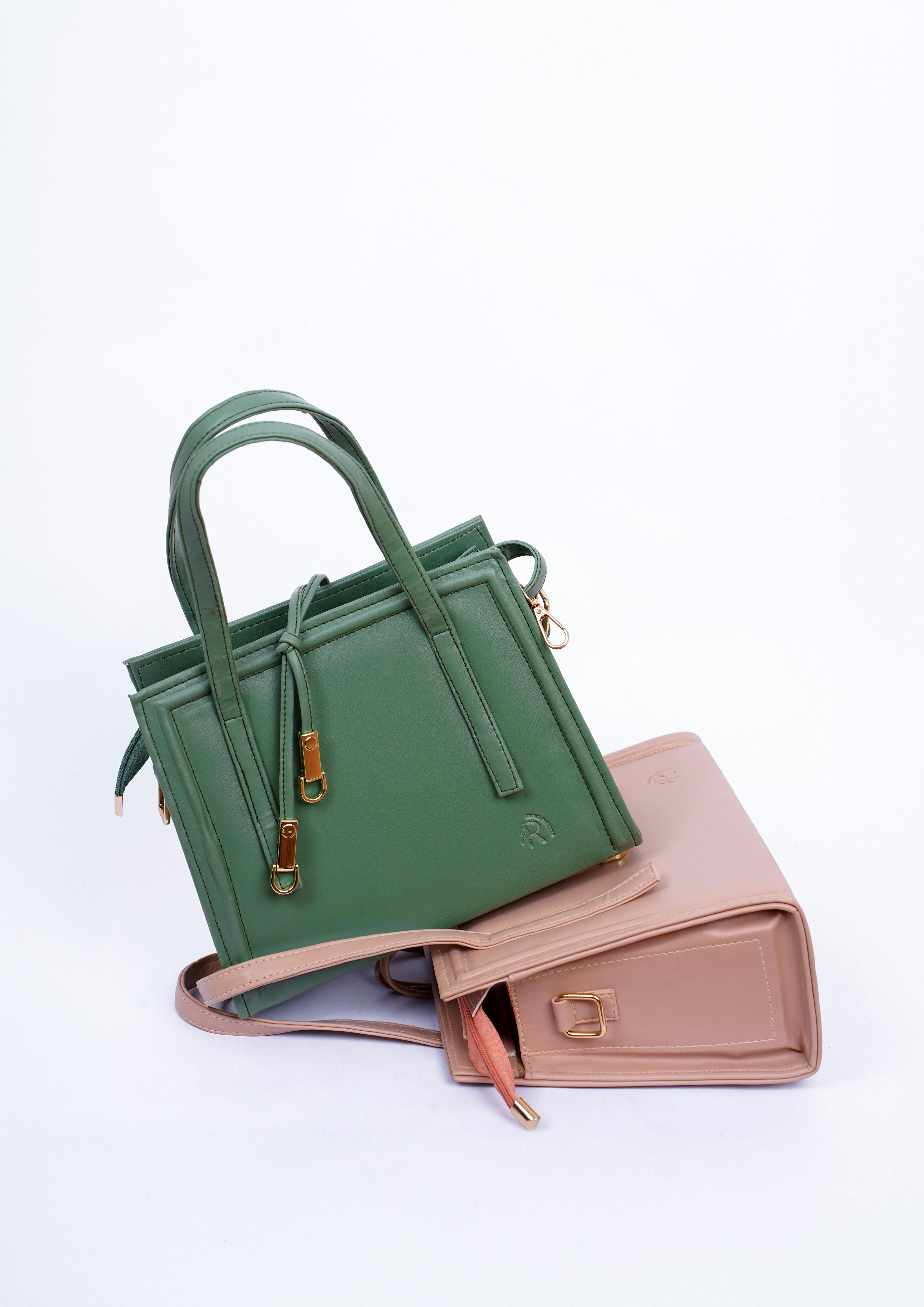
The Checks in Order
Because in-hand inspection is the only reliable method, where you buy matters as much as what you check. Buying new from the brand’s own boutiques or established stockists such as Bergdorf Goodman, Neiman Marcus, Net-a-Porter, Mytheresa or Selfridges removes the question. In-hand authentication is offered by Rebag, The RealReal, Fashionphile and Vestiaire Collective, which puts them below open marketplaces on risk. On Poshmark and eBay the burden falls on you, both flagged in counterfeit reporting as higher-risk venues for this label. Below is the sequence to run before you pay for anything. The table that follows sets out what each checkpoint looks like passing and failing.
- Make sure the model name actually exists and sanity-check the price model by model, not brand-wide
- Work through stitching density and edge paint, in hand or from close-ups
- Check how the leather or suede feels, how the grain runs and how it answers light
- Find both stamps and judge the interior one for crispness and centring
- Test hardware weight, finish and closure action, plus Margaux engraving quality
- Take everything out and see whether it stands and keeps its shape
- Buy through an authenticating source, and treat packaging as corroboration only
| Checkpoint | Reads correct when | Fails if |
|---|---|---|
| Seams and stitching | Even density, no fraying | Wandering lines, loose threads |
| Painted edges | Even coverage, nothing spilling over | Thin patches and bubbling |
| Hide | Weighty yet soft, absorbs light | Throws light back, feels stiff, thin or faintly plasticky |
| Suede | Even in colour and matte from end to end | Colour in patches or a plastic sheen |
| Outside stamp | Low on the side and small | Big, placed high, or visually loud |
| Inside stamp | Crisp and centred, logo with Made in Italy | Smudged, out of alignment or off-centre |
| Fittings | Weighty, matte or brushed, moving precisely | Bright as a mirror, light, rough or gritty |
| Structure | Stands with nothing in it and recovers its form | Slumps, collapsed corners, uneven base |
